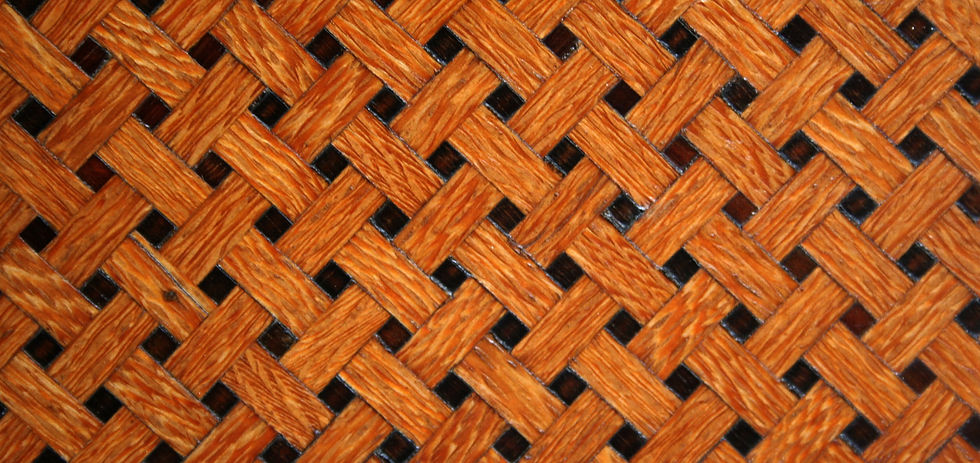
Seuffert and Sons, Escritoire NZ 1880’s
It has been argued that this father and son team (see below) were greatest cabinetmakers ever to work in Australasia. They combined solid marquetry skills with dazzlingly ambitious designs showcasing NZ woods and subject matter.
This desk spent most of its life in a stately Scottish home before returning to NZ in the early 2000’s. I repaired missing mouldings, carved lost drawer handles (which very charmingly were made from the timber of the fruit they represented e.g. puriri berries carved from puriri wood) and replaced small areas of veneer.
The beautiful carvings were made by frequent collaborator Anton Teutenberg a German silversmith who had his premises opposite the Seuffert’s in Shortland St. Unfortunately the carvings had not been secured for decades, so for want of a few screws, the cravings kept falling off and being damaged for many years.
The Seuffert work is always distinguished but it’s ambition but especially its technical perfection - every single piece on a table top containing several thousand tiny pieces marquetry always lines up perfectly. I have worked on dozens of pieces by these masters and over my career and exquisite detail always astounds me.
There are about a dozen of these desks in existence, Te Papa has a couple, Auckland Museum has one, the National Gallery of Australia has another, the rest are in private hands.
Anton and William Seuffert
Anton is a the most celebrated cabinet maker ever to work in NZ. After managing the stand for the distinguished Leistler and Sons cabinetry firm of Vienna at the Great Exhibition in London in 1851. He stayed in the dynamic capital until sailing for NZ 1859, possibly at the recommendation of fellow German-speaker, Great Exhibition exhibitor and NZ woods aficionado, Johann Levien.
Auckland was small settlement of under 20,000 and must have been an unpromising place to start a luxury cabinet making business. Nevertheless, as an expression of their devotion, in1862 the people of NZ purchased from him a magnificent piece of furniture utilising tens of thousands of pieces of exquisite marquetry as a gift to Queen Victoria. It inhabited Buckingham palace for most of its life until recently. Many tables were taken back to England as souvenirs of a returning colonist or soldier’s time in NZ and still turn up regularly at auctions in the UK.
Anton died in 1887 and son William fully took over, his most famous commission is the Baden-Powell Cabinet. This was commissioned by the people of Auckland as a proud mark of their respect to Lord Baden-Powell for the “Relief of Mafeking” in the “Boer War”. Not only is this a remarkable insight into the contemporary attitude to Empire, and to what extent the colonists of NZ regarded themselves as part of the global British diaspora, but also – even more surprising to me - that the greatest artistic gifts a nation felt it could bestow were pieces of furniture – how tastes have changed! The Baden-Powell cabinet returned to NZ in 2013 and is in the Auckland museum collection where it is sometimes on display.
Queen Victoria Cabinet:
https://www.rct.uk/collection/100/secretaire#/referer/241945/creator
Baden-Powell Cabinet
https://www.aucklandmuseum.com/discover/collections/collection-highlights/the-baden-powell-desk
Further Reading:
The Seuffert Legacy, NZ Colonial Master Craftsmen by Brian Peet
Furniture of the NZ Colonial Era: An Illustrated History by William Cottrell.


